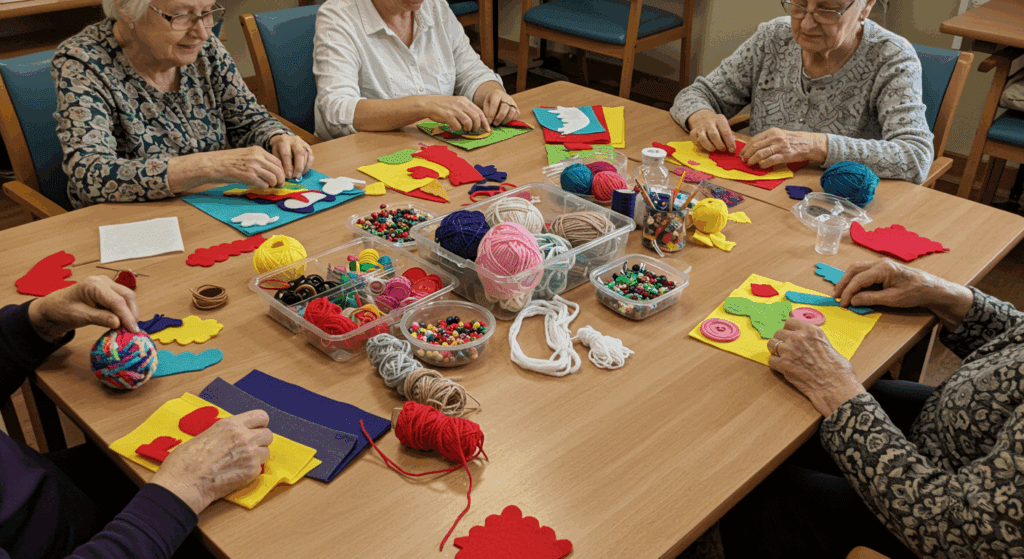
Dementia affects millions of seniors worldwide, bringing challenges that can feel overwhelming for both patients and caregivers. While the condition impacts memory and cognitive function, it doesn’t diminish a person’s need for purpose, creativity, and joy. Engaging in simple crafts for dementia patients can provide exactly these benefits—offering moments of accomplishment, sensory stimulation, and meaningful connection.
The right craft activities can spark memories, encourage self-expression, and create a sense of calm for seniors with dementia. These projects don’t need to be complicated or perfect. Instead, they should focus on the process rather than the outcome, allowing participants to enjoy the experience without pressure.
Whether you’re a family member, caregiver, or activity coordinator at a nursing home, this guide will help you discover easy crafts for elderly participants that bring comfort and engagement to daily routines.
Benefits of Crafting for Seniors with Dementia
Crafting offers unique advantages for individuals living with dementia. These activities tap into muscle memory and procedural knowledge, which often remain intact longer than other cognitive functions.
Sensory stimulation plays a crucial role in dementia care. Crafts engage multiple senses through different textures, colors, and materials. The feel of soft yarn, the satisfaction of smoothing clay, or the visual appeal of bright papers can create positive sensory experiences that reduce agitation and promote relaxation.
Emotional well-being improves when seniors engage in creative activities. Completing a craft project, no matter how simple, provides a sense of accomplishment. This boost in self-esteem can be particularly valuable for individuals who may feel frustrated by their changing abilities.
Social connection naturally develops during group craft sessions. Participants can share stories, offer encouragement to others, and enjoy companionship. These interactions help combat isolation and maintain social skills.
Cognitive stimulation occurs as crafters make choices about colors, follow simple steps, and use problem-solving skills. While crafts shouldn’t be overly complex, they can gently exercise the mind in an enjoyable way.

Find Encouragement in the Caregiving Journey
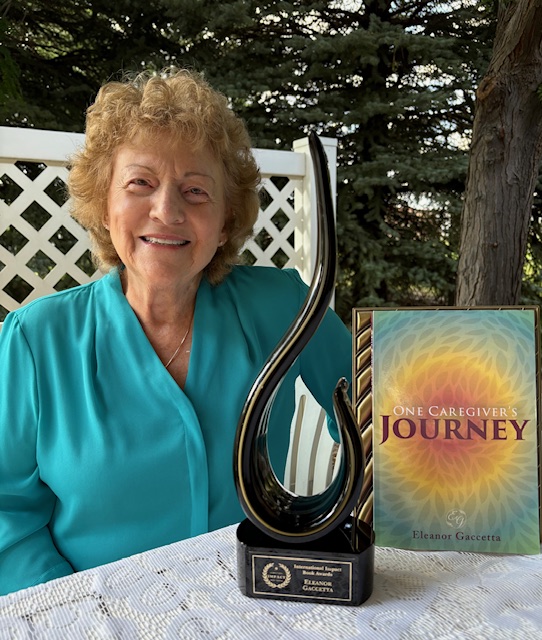
One Caregiver’s Journey
By Eleanor Gaccetta
Genre: Memoir / Family Caregiving
Caring for a loved one can bring moments of joy, exhaustion, and uncertainty. In One Caregiver’s Journey, Eleanor Gaccetta shares heartfelt memories, humor, and practical insights from nine and a half years of caring for her mother. Discover a personal story that reminds caregivers they are not alone.
Find Your Copy on AmazonEssential Guidelines for Dementia-Friendly Crafts
Creating successful craft experiences for seniors with dementia requires thoughtful planning and preparation. These guidelines will help ensure activities are both safe and enjoyable.
Keep instructions simple and clear. Break projects into small, manageable steps. Present one step at a time, and be prepared to repeat instructions patiently. Visual demonstrations work better than lengthy verbal explanations.
Choose familiar materials and themes. Seniors often respond well to crafts that connect to their past experiences. Someone who enjoyed gardening might gravitate toward flower-arranging activities, while others may prefer traditional crafts like knitting or woodworking.
Prioritize safety above all. Avoid small parts that could pose choking hazards, sharp tools, or toxic materials. Opt for washable, non-toxic supplies whenever possible. Consider the individual’s current abilities and adjust accordingly.
Focus on the process, not perfection. The goal isn’t to create museum-quality artwork. Instead, celebrate participation, effort, and enjoyment. Praise attempts and highlight positive aspects of each person’s work.
Prepare for varying attention spans. Some participants may engage for extended periods, while others might only focus for a few minutes. Have flexible expectations and be ready to adapt activities as needed.
Yarn Crafts for Dementia Patients
Yarn crafts for dementia patients offer wonderful tactile experiences and can tap into familiar skills many seniors learned earlier in life. The soft texture of yarn feels comforting, and the repetitive motions can be soothing.
Simple finger knitting requires no needles and creates satisfying results quickly. Participants can make colorful chains that can later become bookmarks, belts, or decorative elements. The repetitive motion often feels calming and meditative.
Yarn wrapping projects work well for varying skill levels. Wrap yarn around cardboard shapes, paper towel tubes, or foam forms to create colorful decorations. These projects allow for creativity in color choices while keeping the technique simple.
Pom-pom making brings joy through its transformation process. Using traditional pom-pom makers or simply wrapping yarn around a fork creates fluffy, satisfying results. These can become keychains, decorations, or simply tactile objects to enjoy.
Weaving on simple looms provides structure while allowing creative expression. Large cardboard looms or basic wooden frames work well. Participants can weave with yarn, fabric strips, or even paper to create placemats or wall hangings.
Summer Crafts for Seniors with Dementia
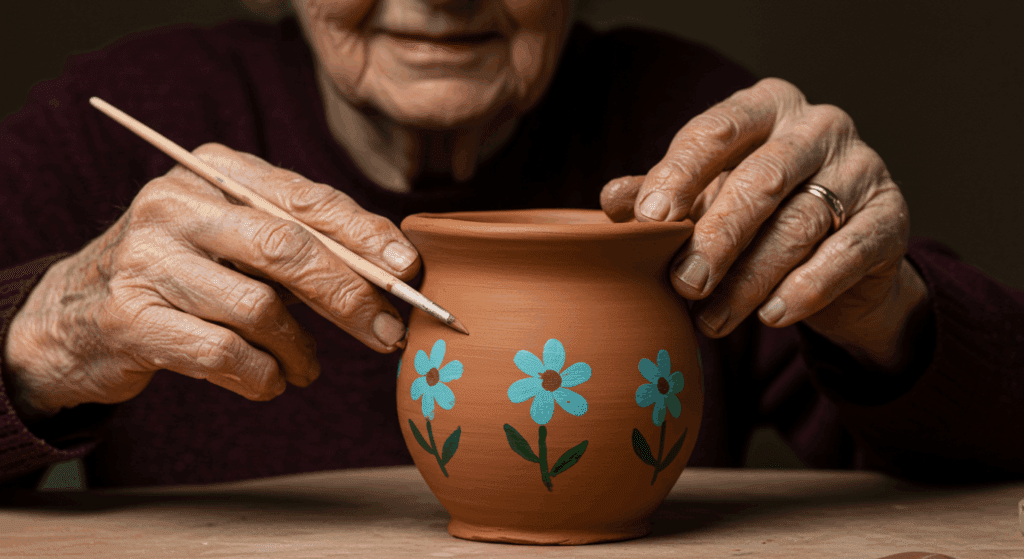
Summer crafts for seniors with dementia can capture the season’s warmth and energy while providing engaging activities during longer daylight hours.
Pressed flower projects celebrate summer’s natural beauty. Collect flowers and leaves during walks, then press them between heavy books. Once dried, these can be arranged in frames, used to decorate bookmarks, or incorporated into greeting cards.
Garden-themed crafts connect to summer memories. Create paper plate gardens using tissue paper flowers, paint flower pots for real or artificial plants, or make seed packets from decorative paper.
Beach-inspired activities evoke summer memories even when staying indoors. Paint seashells, create sand art in clear containers, or make paper fish to “swim” in blue tissue paper waves.
Ice cream cone crafts bring smiles through familiar summer treats. Use construction paper and cotton balls to create ice cream sundaes, or decorate real waffle cones with paint and ribbons for centerpieces.
Easy Crafts for Elderly in Nursing Homes
Nursing home environments benefit from crafts that require minimal setup and cleanup while accommodating various ability levels and interests.
Collage projects work well for group settings. Provide magazines, safety scissors, and glue sticks. Participants can create themed collages about seasons, memories, or simple subjects like animals or flowers. The cutting and pasting motions feel familiar and satisfying.
Painting activities should focus on enjoyment rather than artistic skill. Watercolors, finger paints, or even painting with cotton swabs can create beautiful effects. Large brushes and washable paints make the experience more manageable.
Decorating picture frames allows for personalization while creating functional items. Use wooden or cardboard frames and decorate with stickers, markers, or small decorative elements. These can hold family photos or artwork created during other sessions.
Simple jewelry making with large beads and elastic cord creates wearable art. Choose beads large enough to handle easily and strings that don’t require small clasps. The repetitive motion of stringing beads can be very calming.
Free Printable Resources and Seasonal Ideas
Many free printable easy crafts for seniors with dementia are available online, offering convenient options for caregivers and activity coordinators.
Coloring pages designed for adults provide hours of peaceful activity. Look for designs with larger spaces and less intricate details. Seasonal themes, familiar objects, and nature scenes often work well.
Paper crafts using printable templates make project preparation easier. Simple paper flowers, holiday decorations, or memory books can be created using templates printed on cardstock.
Activity calendars help plan seasonal crafts throughout the year. Spring might feature flower crafts, while winter could focus on holiday decorations or warm, cozy themes.
Remember to laminate frequently used templates or print extras, as some participants may prefer to start fresh with each session.
Creating Meaningful Craft Experiences
The most successful craft sessions focus on creating positive experiences rather than perfect products. Pay attention to each participant’s mood, energy level, and interests on any given day.
Some individuals may prefer working independently, while others thrive in group settings. Offer choices when possible, allowing participants to select colors, materials, or even whether to participate at all.
Document the process with photos (with appropriate permissions) to share with families or to help participants remember their accomplishments. These visual reminders can spark conversations and provide connection points for future interactions.
Consider creating displays of finished work to celebrate everyone’s efforts. This recognition can boost self-esteem and provide topics for conversation with visitors.
Building a Sustainable Craft Program
Successful craft programs require planning, patience, and flexibility. Start with simple projects and gradually introduce new ideas based on participant responses and interests.
Build relationships with local craft stores, schools, or community groups who might donate supplies or volunteer assistance. Many businesses are happy to support senior programs with donations or discounted materials.
Train staff and volunteers to understand the goals of dementia-friendly crafting. Emphasize patience, encouragement, and person-centered approaches that honor each individual’s dignity and preferences.
Keep detailed notes about which activities work well and which don’t. This information helps refine your program and ensures you can repeat successful sessions.
Conclusion and Call to Action
Engaging in crafts for seniors with dementia is more than just a fun activity—it’s a meaningful way to spark creativity, stimulate the mind, and foster emotional connection. Simple, hands-on crafts can bring joy, reduce anxiety, and help seniors maintain a sense of purpose and independence. With the right activities, every moment can become an opportunity for comfort, expression, and shared memories.
Call to Action
Start with one simple craft today and enjoy the positive impact it brings. For more easy and dementia-friendly craft ideas, download our activity guide or join our caregiving community for tips, inspiration, and support. Let’s make each day meaningful—one craft at a time.
Frequently Asked Questions (FAQs)
Q: My loved one gets frustrated easily. What should I do?
A: Stop the activity immediately. The goal is joy, not frustration. Try a different, simpler craft later, or just switch to listening to music or going for a walk. Never force it.
Q: What if they put things in their mouth?
A: Safety first! Always supervise. For those who may put items in their mouth, use large materials that are not a choking hazard (like large pom-poms) and avoid toxic glues or paints. Sensory bags are a great safe alternative.
Q: How long should a crafting session last?
A: Follow your loved one’s cues. It could be 5 minutes or 30 minutes. Even a short, positive experience is a success. It’s better to end while they are still enjoying it than to wait until they are tired.
Q: My father was never “crafty.” Will this still work?
A: Absolutely! The word “craft” can be intimidating. Instead, think of it as a “simple activity.” Maybe he would enjoy polishing shoes, sorting nails in a workshop, or wiping a table. Tailor the activity to his interests.
Q: Where can I find more ideas and support?
A: Great resources include the Alzheimer’s Association (alz.org) and AARP’s Caregiving Resources. Many local community centers and memory cafes also offer activity groups.
A Final Word of Encouragement
Crafting with your loved one with dementia is a gift. It’s a way to communicate love and respect without the need for complex words. It’s about being together in the moment. Don’t worry about perfection. Embrace the messy, joyful, and sometimes quiet moments of connection. You are not just doing a craft; you are creating a precious memory.