


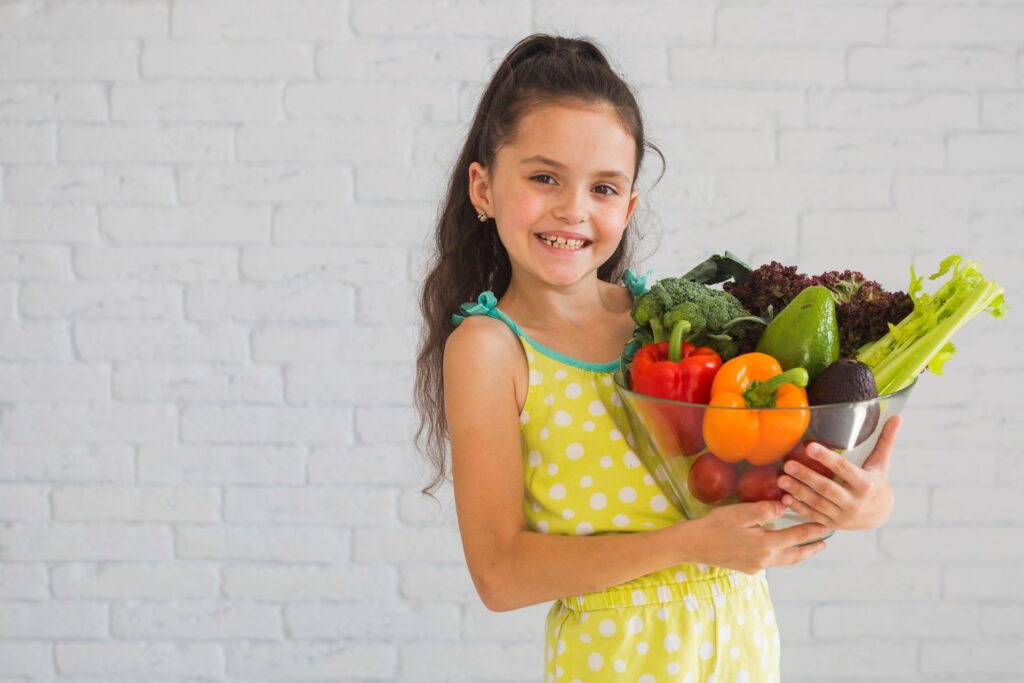
Photo Link: Image by freepik
Does dinner time sometimes feel like a battle? Do you find yourself begging, “Just one more bite of broccoli!” while your child firmly shakes their head?
If this sounds familiar, you are not alone. Getting kids to eat their vegetables is one of the most common challenges parents face. But don’t worry! You don’t need to be a superhero to win this battle. You just need a few smart strategies. This guide will turn you into a true “Veggie Hero,” helping you encourage your kids to love vegetables in a positive, stress-free way.
Why Do Kids Hate Vegetables? (It’s Not Just You!)
First, it helps to know you’re not doing anything wrong. There are real reasons why kids often push their veggies away.
- Biology: Kids are born liking sweet tastes (like breast milk) and being wary of bitter or sour ones. Many vegetables have a slightly bitter taste.
- Neophobia: This is a fancy word for “fear of new things.” For little kids, being suspicious of new foods is a normal stage of development. It was a safety instinct a long, long time ago!
- Texture: Sometimes, it’s not the taste but the way a vegetable feels in their mouth. Mushy, slimy, or stringy textures can be a big turn-off.
- Control: Saying “no” to food is one of the first ways young children can express their independence.
Understanding this helps us be more patient. Our job isn’t to force them, but to guide them.
Become a Veggie Hero: 10 Playful & Powerful Strategies
Forget forcing. The goal is to make vegetables familiar, fun, and friendly.
1. Be a Role Model (The Copycat Effect)
Kids are great copycats. Let them see you enjoying a variety of vegetables. Talk about how much you love your “crunchy carrots” or “yummy green beans.” Eat meals together as a family as often as you can. Your excitement is contagious!
2. Cook Together, Eat Together
When kids help in the kitchen, they feel proud and are more likely to try what they’ve made. Give them simple, safe jobs:
- Washing the veggies.
- Tearing lettuce for a salad.
- Stirring the pot.
- Adding ingredients to a bowl.
They’re not just your little helper; they’re a junior chef!
3. Make Food Fun & Playful
You eat with your eyes first! Make the plate colorful and fun.
- Create a Scene: Make a “forest” of broccoli trees, with mashed potato snow and a chicken drumstick log.
- Use Fun Shapes: Use cookie cutters to turn cucumber slices or sweet potato roasts into stars and hearts.
- Give it a Cool Name: Calling broccoli “dinosaur trees” or peas “power pellets” can work magic. One famous study found that calling broccoli “X-Ray Vision Carrots” made kids eat twice as much!
4. The “No Pressure” Taste Test
The pressure to take a bite can make kids nervous. Instead, create a no-stress environment.
- The One-Bite Rule: Encourage them to take just one, polite “no-thank-you” bite. If they don’t like it, that’s okay. Thank them for trying.
- The Taste Test Game: Put a few different veggies on a plate (like a bell pepper strip, a cherry tomato, and a cucumber circle). Let your child be a “food critic” and describe them—is it crunchy? Sweet? Juicy? This takes the focus off of “eating” and puts it on “discovering.”
5. Hide & Seek… with Flavor!
While the goal is for kids to learn to love visible veggies, there’s nothing wrong with sneaking them into meals for an extra nutrition boost.
- Blend spinach or cauliflower into a fruit smoothie.
- Grate zucchini or carrots into pasta sauce, meatballs, or muffins.
- Make mashed potatoes with half cauliflower.
6. Take Them Shopping
Bring your child to the grocery store or farmers market. Let them pick out a “new” vegetable to try. Give them two choices, like “Should we get the green zucchini or the yellow squash today?” This gives them a sense of control and ownership.
7. Grow Your Own!
Plant a small garden or even just a pot of cherry tomatoes or herbs on the windowsill. A child who has watered and watched a plant grow will be incredibly excited to taste what they’ve grown.
8. Offer Dips!
Dips are a game-changer. The familiar, creamy taste can help bridge the gap to a new vegetable.
- Ranch dressing
- Hummus
- Yogurt-based dip
- Guacamole
9. Keep Offering, Don’t Give Up
It can take 10-15 times of seeing a new food before a child feels brave enough to try it. If they refuse carrots today, don’t cross them off the list. Serve them again in a week or two, prepared a different way (raw instead of cooked, for example).
10. Praise the Effort, Not the Result
Instead of saying, “Good job for eating your broccoli!” try, “I’m so proud of you for trying something new!” This encourages a brave and adventurous attitude toward food.
Helpful Statistics to Know
- It Takes Time: Research shows it can take 8-15 exposures to a new food before a child will accept it. (Source: Journal of the Academy of Nutrition and Dietetics)
- The Power of a Name: A study from Cornell University found that giving vegetables fun names like “X-Ray Vision Carrots” or “Power Punch Broccoli” doubled the amount kids ate at lunch.
- A Widespread Challenge: A CDC report found that only 1 in 10 children in the U.S. eat the recommended daily amount of vegetables.
Frequently Asked Questions (FAQs)
Q: My child will only eat raw carrots and cucumbers. Is that okay?
A: Yes, that’s a great start! Raw vegetables are just as nutritious as cooked ones. Celebrate the veggies they do like. Over time, you can slowly introduce other raw veggies, like bell peppers or cherry tomatoes, and eventually try cooked versions of their favorites.
Q: Should I hide vegetables if my child is a super picky eater?
A: Think of it as a two-part plan. “Hiding” veggies in sauces and smoothies ensures they get the nutrients they need now. At the same time, keep offering visible vegetables at the table with no pressure. This helps them become familiar and, eventually, willing to try them.
Q: What if my child gags when they try a new vegetable?
A: Stay calm. Gagging is a normal reflex for young children when trying new textures. It’s different from choking. Gently say, “It’s okay, just spit it out into your napkin.” Reassure them and try again another day with a smaller piece or a different vegetable.
Q: Is it bad to use a little dessert as a reward for eating veggies?
A: It’s best to avoid this. Using dessert as a reward makes vegetables seem like the “bad” food you have to get through to reach the “good” food. This can make them dislike vegetables even more. Instead, serve a small dessert with the meal sometimes, or afterward, with no strings attached.
Q: My child used to eat everything, but now they’re picky. What happened?
A: This is extremely common around age 2-3! It’s a normal part of development as they seek more control. Stay patient, keep offering a variety of foods (including their old favorites), and trust that this is usually just a phase.
The Takeaway for Veggie Heroes
Remember, your job as a parent is to provide healthy options in a positive environment. Your child’s job is to decide what and how much to eat from what you offer.
You are not just feeding your child for today; you are helping them build a healthy relationship with food for life. By staying positive, patient, and playful, you can gently guide your child from “yuck” to “yum.” Keep up the great work, Veggie Hero

2 comments
Cassandra
do these suggestions work for adults as well? my husband is such a picky eater lol