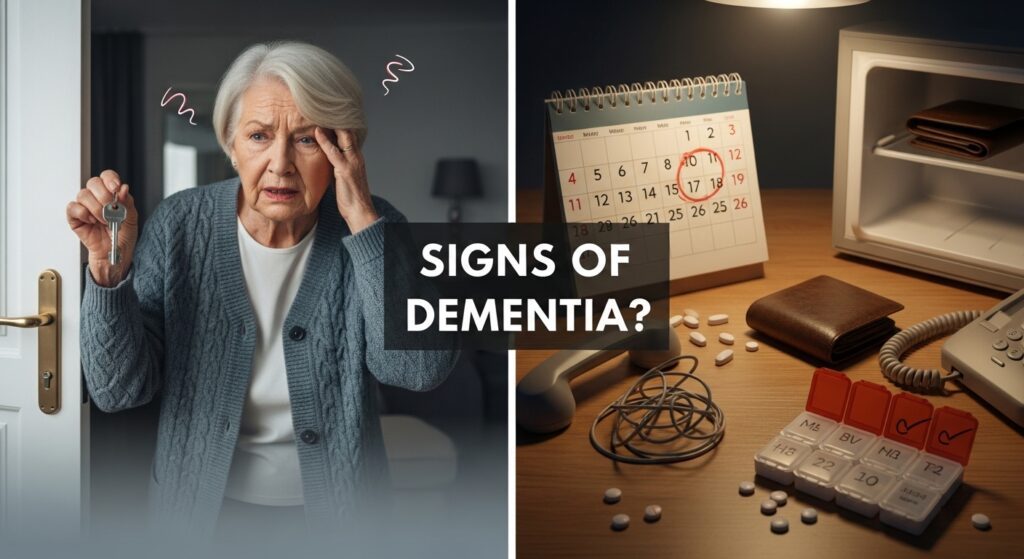
When someone you love starts forgetting things or acting differently, it’s scary. Your mind might jump to dementia. You want answers, and you want them quickly. Doctors often use powerful machines like MRI scanners to look inside the brain. But can this machine really see the early signs of dementia?
The short answer is yes, an MRI can show early signs that might suggest dementia, but it cannot diagnose dementia on its own.
Think of an MRI like a super-powered camera for the brain. It can take incredibly detailed pictures that show the brain’s structure. It can reveal if parts of the brain are getting smaller or if there are changes that shouldn’t be there. This gives doctors important clues.
However, dementia is more than just a picture. It’s a complex condition that affects how a person thinks, remembers, and acts. A doctor needs to put together the whole puzzle, and the MRI is just one piece. For instance, you might notice behavioral changes like your loved one talking to themselves more often, which is a common behavior that can be confusing for caregivers.
This article will guide you through how an MRI helps with dementia, what doctors look for, and what to expect. Our goal is to make this confusing topic clear and give you the knowledge you need.
Can an MRI Diagnose Dementia?
No, an MRI cannot diagnose dementia by itself.
This is the most important thing to understand. Getting a dementia diagnosis is like a detective solving a mystery. The doctor is the detective, and they need to gather many different types of evidence.
Here’s what the doctor uses to make a diagnosis:
- Medical History: The doctor will talk to the patient and their family about the symptoms. When did they start? How have they changed? What specific problems are they having?
- Cognitive Tests: These are paper-and-pencil or question-and-answer tests that check memory, problem-solving skills, attention, and language. They are like a “test” for the brain’s thinking abilities.
- Physical and Neurological Exams: The doctor will check for other health issues that could cause similar symptoms, like a vitamin deficiency, thyroid problem, or infection.
- Brain Scans (like MRI): This is where the MRI comes in. The scan helps the doctor rule out other causes of the symptoms. For example, a brain tumor, a major stroke, or a buildup of fluid in the brain can sometimes cause memory problems. An MRI can spot these issues. If these other problems are ruled out, it makes a dementia diagnosis more likely.

Find Encouragement in the Caregiving Journey
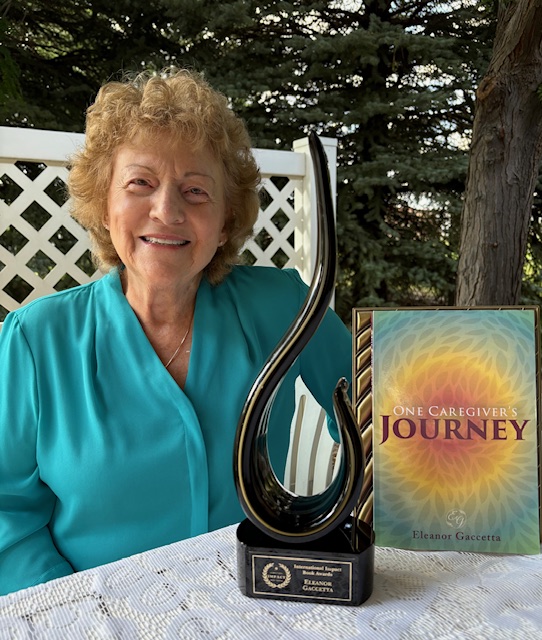
One Caregiver’s Journey
By Eleanor Gaccetta
Genre: Memoir / Family Caregiving
Caring for a loved one can bring moments of joy, exhaustion, and uncertainty. In One Caregiver’s Journey, Eleanor Gaccetta shares heartfelt memories, humor, and practical insights from nine and a half years of caring for her mother. Discover a personal story that reminds caregivers they are not alone.
Find Your Copy on AmazonSo, while an MRI can’t say, “Yes, this is Alzheimer’s disease,” it provides crucial evidence that supports the diagnosis.
What Does Dementia Look Like on an MRI?
When a radiologist (a doctor who specializes in reading medical images) looks at an MRI of a person with dementia, they are looking for specific changes in the brain’s structure.
Here are the main things they check for:
- Brain Shrinkage (Atrophy): This is the most common sign. Our brains naturally shrink a little as we age, but in dementia, this shrinkage happens much faster and in specific areas.
- In Alzheimer’s disease, the brain cells in the memory centers, called the hippocampus, often shrink first and most noticeably.
- In Frontotemporal Dementia, the shrinkage is more in the front and sides of the brain, which control personality, behavior, and language.
- Changes in the White Matter: The brain has “gray matter” (the thinking cells) and “white matter” (the wiring that connects the cells). On an MRI, tiny bright spots in the white matter can be a sign of small blood vessel disease. This can slow down thinking and is often linked to Vascular Dementia.
- The Size of the Ventricles: The ventricles are fluid-filled spaces in the middle of the brain. When brain tissue shrinks, these spaces get larger to fill the gap. Enlarged ventricles are another clue that brain volume has been lost.
It’s not just about seeing if these changes are there, but also where they are and how severe they are.
Dementia Brain Scans vs. a Normal Brain Scan
It can be helpful to see the difference. The images below are simplified examples of what a doctor might see.
(Note: This is a descriptive comparison as I cannot generate actual medical images.)
A Normal, Healthy Aging Brain (on MRI):
- The brain has a healthy, full shape with many folds.
- The hippocampus (the memory center) is plump and well-defined.
- The ventricles (fluid spaces) are a normal, small size.
- There are very few or no unusual bright spots in the white matter.
A Brain with Alzheimer’s Disease (on MRI):
- You would notice that the overall brain appears to have shrunk, with more space between the brain and the skull.
- The grooves on the brain’s surface (sulci) look wider.
- The hippocampus is visibly smaller and more shriveled compared to a healthy brain.
- The ventricles are noticeably larger.
A Brain with Vascular Dementia (on MRI):
- The brain might not show as much overall shrinkage.
- The most striking feature would be multiple bright white spots or patches (called white matter hyperintensities) scattered throughout the white matter. These are signs of tiny strokes or reduced blood flow.
Can an MRI Diagnose Early Signs of Dementia?
This is the key question for many families. The answer is promising but still has limits.
Yes, an MRI can sometimes detect brain changes very early, even before obvious symptoms appear.
Advanced MRI techniques are getting better at spotting the earliest signs. For example, they can measure the volume of the hippocampus with great precision. If it’s smaller than expected for a person’s age, it can be a red flag.
However, it’s not a perfect crystal ball. Here’s why:
- Overlap with Normal Aging: Some brain shrinkage is normal. It can be hard to tell the difference between very early Alzheimer’s and the natural aging process.
- Not Everyone Fits the Pattern: Some people can have significant brain changes on an MRI but still function quite well, thanks to what’s called “cognitive reserve.” Others might have clear symptoms but less dramatic MRI changes.
Because of this, doctors are careful. They would not diagnose someone with early dementia based on an MRI alone. But if a person is already showing mild memory problems, and the MRI shows a shrinking hippocampus, it strongly supports the idea that it might be early Alzheimer’s disease.
Is MRI or CT Scan Better for Detecting Dementia?
Both MRI and CT scans are used, but an MRI is generally the preferred choice.
| Feature | MRI (Magnetic Resonance Imaging) | CT Scan (Computed Tomography) |
| Image Detail | Excellent. Shows much clearer, more detailed pictures of the brain’s structure. | Good. Shows the basic structure but with less fine detail. |
| What it’s best for | Spotting early shrinkage in specific areas like the hippocampus. Detecting small changes in white matter. | Ruling out other problems quickly, like a large tumor, bleeding, or a major stroke. |
| Procedure | Longer (30-60 mins). You lie in a narrow tube, which can feel confining. It’s very loud. | Very fast (5-10 mins). It’s an open ring, so it’s better for people who are claustrophobic. |
| How it works | Uses powerful magnets and radio waves. | Uses a small amount of X-ray radiation. |
The Bottom Line: A doctor will often start with an MRI because it gives the most detailed information about the brain changes linked to dementia. However, if a person cannot have an MRI (for example, because they have a pacemaker) or if they are too agitated to lie still for the longer scan, a CT scan is a very useful alternative to rule out other major issues.
What Are Early Indications of Dementia?
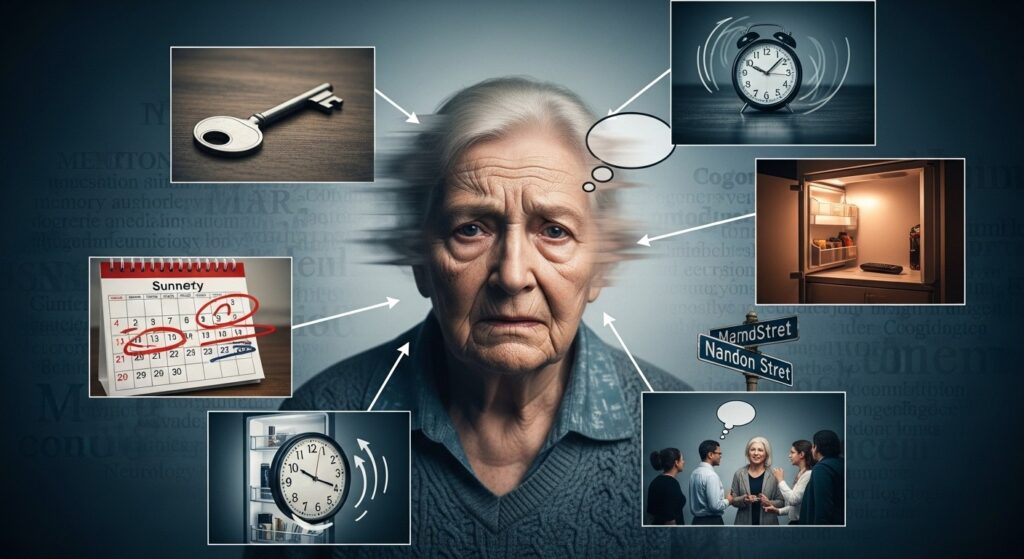
Before we even get to brain scans, there are often real-life signs that something is wrong. Dementia is more than just forgetfulness. It’s a decline in mental ability that is severe enough to interfere with daily life.
Here are 10 early signs to watch for:
- Memory Loss That Disrupts Life: Forgetting recently learned information, important dates or events, asking for the same information over and over.
- Challenges in Planning or Solving Problems: Trouble following a familiar recipe, keeping track of monthly bills, or concentrating on detailed tasks.
- Difficulty Completing Familiar Tasks: Getting lost while driving to a familiar location, forgetting the rules of a favorite game, or struggling to manage a budget.
- Confusion with Time or Place: Losing track of dates, seasons, and the passage of time. Forgetting where they are or how they got there.
- Trouble Understanding Visual Images and Spatial Relationships: New problems with vision, like trouble reading, judging distance, or determining color. This can sometimes lead to increased car accidents.
- New Problems with Words in Speaking or Writing: Trouble following or joining a conversation. Stopping in the middle of a conversation and not knowing how to continue. Repeating themselves. Struggling with vocabulary.
- Misplacing Things and Losing the Ability to Retrace Steps: Putting things in unusual places (like car keys in the refrigerator). Being unable to go back over their steps to find them. They may accuse others of stealing.
- Decreased or Poor Judgment: Experiencing changes in judgment or decision-making. For example, paying less attention to grooming or giving large amounts of money to telemarketers.
- Withdrawal from Work or Social Activities: Pulling away from hobbies, social activities, or work projects. They may have trouble remembering how to do a hobby and therefore avoid it.
- Changes in Mood and Personality: Becoming confused, suspicious, depressed, fearful, or anxious. They may get easily upset at home, at work, with friends, or in places where they are out of their comfort zone.
If you notice several of these signs in yourself or a loved one, it is important to see a doctor for a full check-up.
How Do Doctors Diagnose Dementia?
As we’ve learned, diagnosis is a multi-step process. Here is a clearer picture of what that journey looks like:
- The First Step: The Primary Care Doctor. It usually starts with a visit to a family doctor. They will do a physical exam, review medications, and do basic blood tests to rule out other causes (like thyroid issues or vitamin deficiencies).
- The Referral: If needed, the primary doctor may refer the patient to a specialist, such as a:
- Neurologist: Specializes in diseases of the brain and nerves.
- Geriatrician: Specializes in the care of older adults.
- Neuropsychologist: Specializes in detailed testing of memory and thinking skills.
- The Comprehensive Assessment: The specialist will conduct a deeper evaluation, which includes:
- A detailed medical and family history.
- A thorough neurological exam (testing reflexes, coordination, senses).
- Cognitive and Neuropsychological Tests: These are more in-depth than the primary care doctor’s test. They can take hours and assess all areas of mental function.
- Brain Scans (MRI or CT): To look for the structural changes we discussed.
- Other Tests: Sometimes, other tests like a PET scan or a spinal tap (lumbar puncture) are used in special cases to look for proteins like amyloid and tau, which are hallmarks of Alzheimer’s disease.
- The Diagnosis: After all the information is gathered, the doctor will share their findings. They will explain what type of dementia they suspect (e.g., Alzheimer’s, Vascular, Lewy Body) and what the next steps are for care and support.
Frequently Asked Questions (FAQs)
What is the best scan to detect dementia?
There is no single “best” scan. An MRI is often the most helpful because it provides the most detailed pictures of brain structure and can show early shrinkage. However, a PET scan can show abnormal activity in the brain and is sometimes used for more complex cases.
Can you see dementia on an MRI?
You cannot see the disease “dementia” itself. But you can see the physical changes in the brain that dementia causes, like shrinkage, enlarged ventricles, and white matter disease. These changes strongly suggest that dementia is present.
How accurate is an MRI in detecting dementia?
An MRI is very accurate at showing the physical changes in the brain. However, linking those changes directly to a dementia diagnosis is not 100% accurate because there is an overlap with normal aging. Its accuracy increases when combined with cognitive tests and a doctor’s assessment.
What are the 5 warning signs of dementia?
Five of the most common early warning signs are:
- Memory loss that affects daily life.
- Trouble planning or solving problems.
- Difficulty completing familiar tasks.
- Confusion with time or place.
- New problems with words when speaking or writing.
Can an MRI show the difference between dementia and Alzheimer’s?
Sometimes. Different types of dementia often affect different parts of the brain. Alzheimer’s typically shows shrinkage in the hippocampus first. Frontotemporal dementia shows shrinkage in the front of the brain. Vascular dementia shows bright spots in the brain’s white matter. An MRI can show these patterns, helping doctors tell the difference.
Key Statistics to Know
- Over 55 million people worldwide are living with dementia. (World Health Organization)
- Alzheimer’s disease accounts for 60-80% of all dementia cases. (Alzheimer’s Association)
- 1 in 9 people age 65 and older has Alzheimer’s dementia. (Alzheimer’s Association)
- Brain changes from Alzheimer’s can begin 20 years or more before symptoms appear. (National Institute on Aging)
Conclusion: Piecing Together the Puzzle
Understanding the role of an MRI in diagnosing dementia can help manage expectations and reduce anxiety. An MRI is a powerful tool that provides a window into the brain, revealing crucial physical clues like shrinkage, white matter changes, and enlarged ventricles. It is exceptionally good at ruling out other conditions and supporting a doctor’s clinical findings.
However, it is vital to remember that an MRI is just one piece of a larger puzzle. A dementia diagnosis is not made from a scan alone. It is a comprehensive process that combines a detailed medical history, cognitive tests, physical exams, and the expertise of a skilled doctor. The scan shows the structure of the brain, but the diagnosis comes from understanding how that structure relates to a person’s function—their memory, behavior, and daily life.
While the journey can feel overwhelming, knowledge is power. Recognizing the early signs and understanding the diagnostic process is the first step toward getting the right care, support, and treatment plan. For caregivers, this often means adapting daily life, which can include finding engaging activities like simple and safe crafts for seniors with dementia.
Your Next Step: Take Action with Knowledge
If you or someone you love is experiencing persistent memory loss or other symptoms that concern you, do not wait. The uncertainty can be more frightening than taking the first step.
Schedule an appointment with your primary care doctor today. Be specific about the changes you’ve noticed. Keep a journal of examples to share. Starting this conversation is the most important action you can take. It opens the door to a proper evaluation, which can lead to an accurate diagnosis, access to treatments that may help manage symptoms, and the ability to plan for the future.
You don’t have to walk this path alone. For further support and resources, reach out to reputable organizations like the Alzheimer’s Association (alz.org) or the National Institute on Aging (nia.nih.gov). For practical caregiving tips, from managing caregiver mental strain to establishing essential daily routines, exploring dedicated caregiver resources can provide immense support. Taking this step empowers you to move from fear toward understanding and proactive care.
Disclaimer: This article is for informational purposes only and is not a substitute for professional medical advice, diagnosis, or treatment. Always seek the advice of your physician or other qualified health provider with any questions you may have regarding a medical condition.